Turning Credit Caution Into Customer Adoption

Building Trust Through Responsible Credit

My Role
Led the 0→1 design and continued evolution of Pay in 30 Days and PayPal Ratenzahlung—two credit products that did not previously exist at PayPal Germany. Following the latest redesign, monthly TPV increased 48.78% for Pay in 30 Days and 14.92% for Ratenzahlung compared with their previous production versions.

The need behind the trust equation

A woman inspecting a delivery against the PayPal app on her phone at her kitchen counter.

German customers wanted flexibility without feeling pushed into debt: time to inspect a purchase before paying, and predictable installments for larger costs. Friction and uncertainty weakened trust at the moments of choice and commitment.

The Strategic Bet

Adoption would grow if customers could understand the cost earlier, complete fewer unnecessary steps, and retain control after purchase.

The Tradeoff

A faster application could not come at the expense of an informed decision. We removed unnecessary steps while keeping costs, terms, and commitment clear.

The trust equation

The trust equation: trust equals flexibility, minus friction, plus transparency, plus control. Each variable is solved by the work described below.

Solving the equation, one variable at a time

Two needs. Two products.

I designed two paths: time before payment with Pay in 30, and predictable installments with Ratenzahlung.
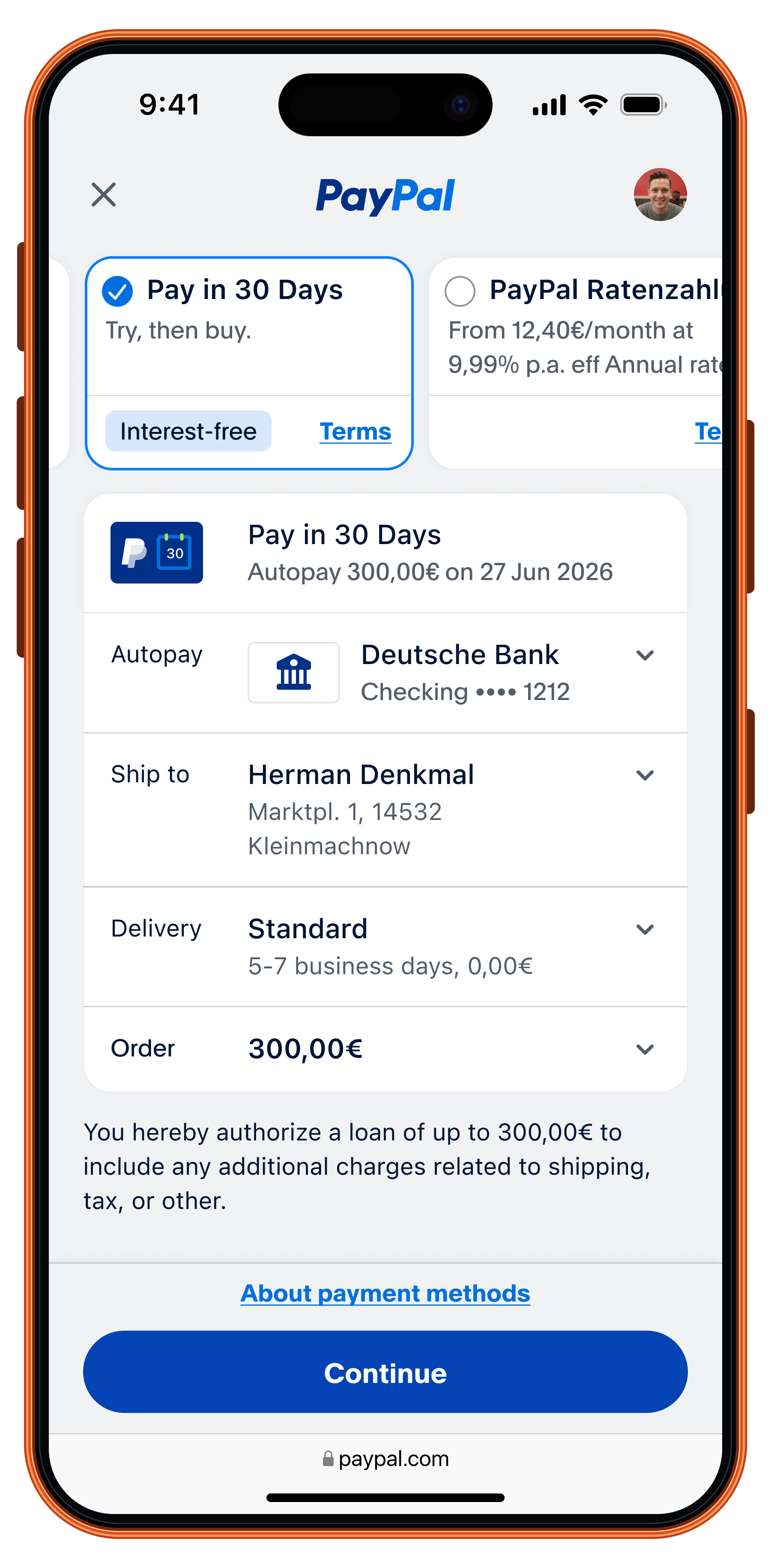
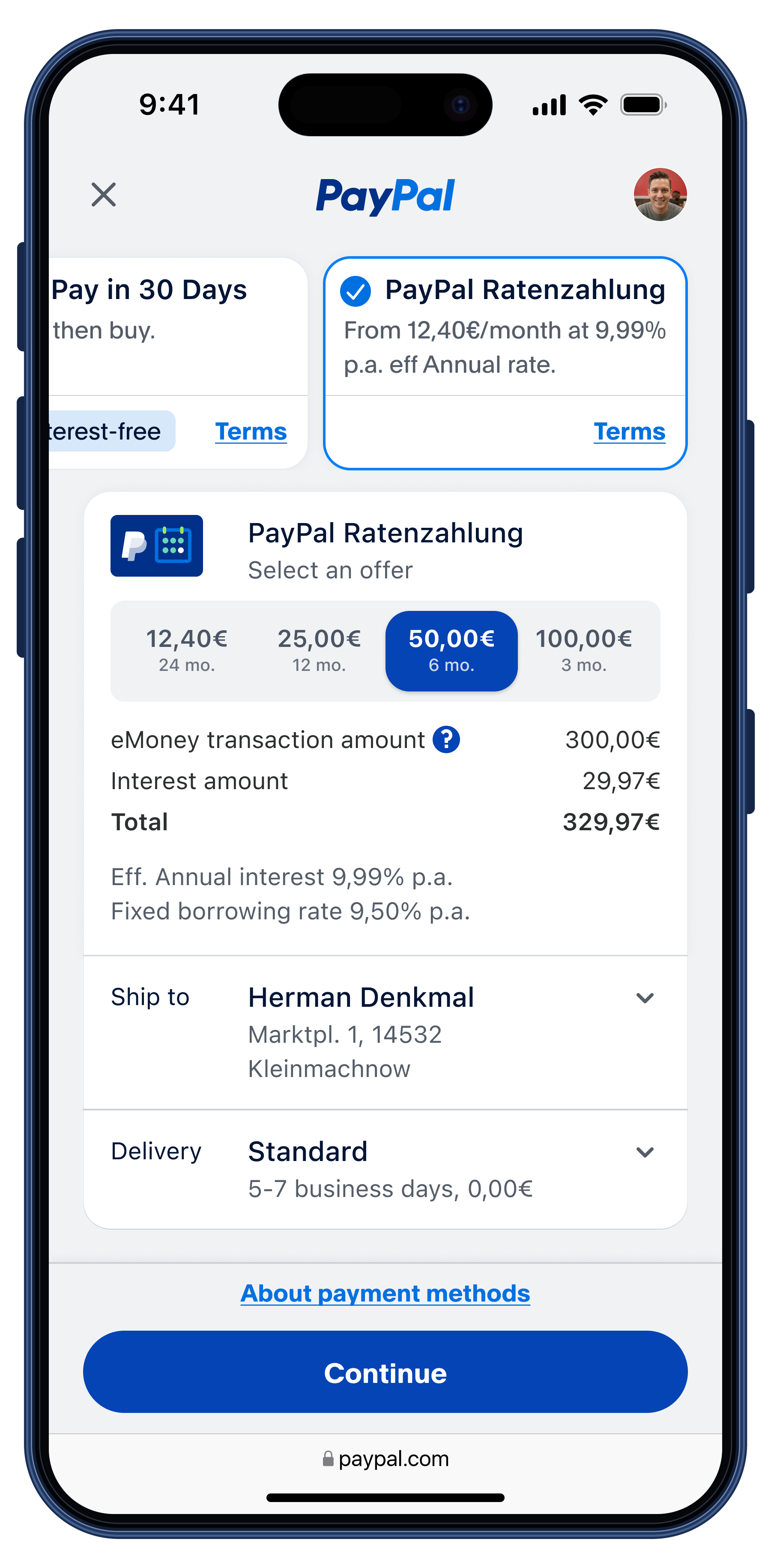
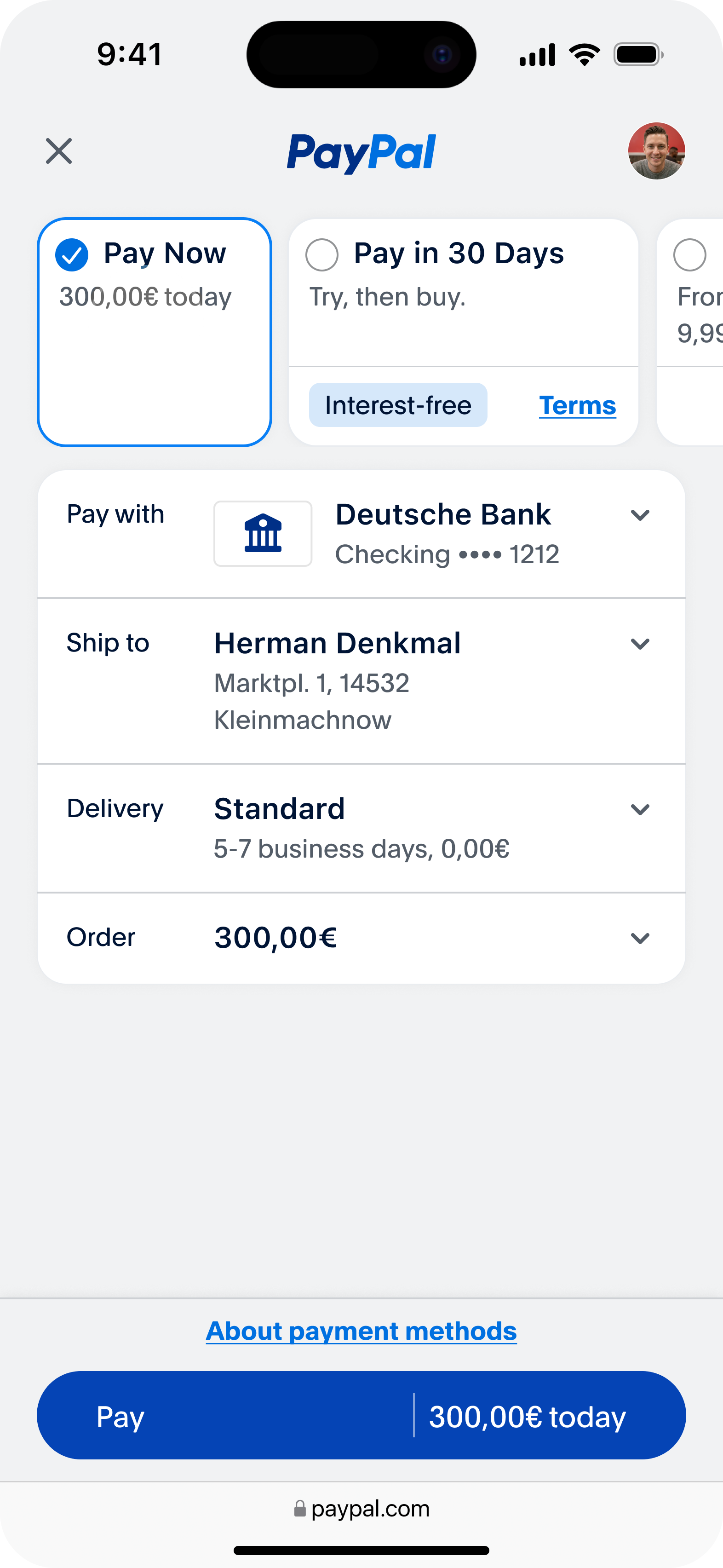
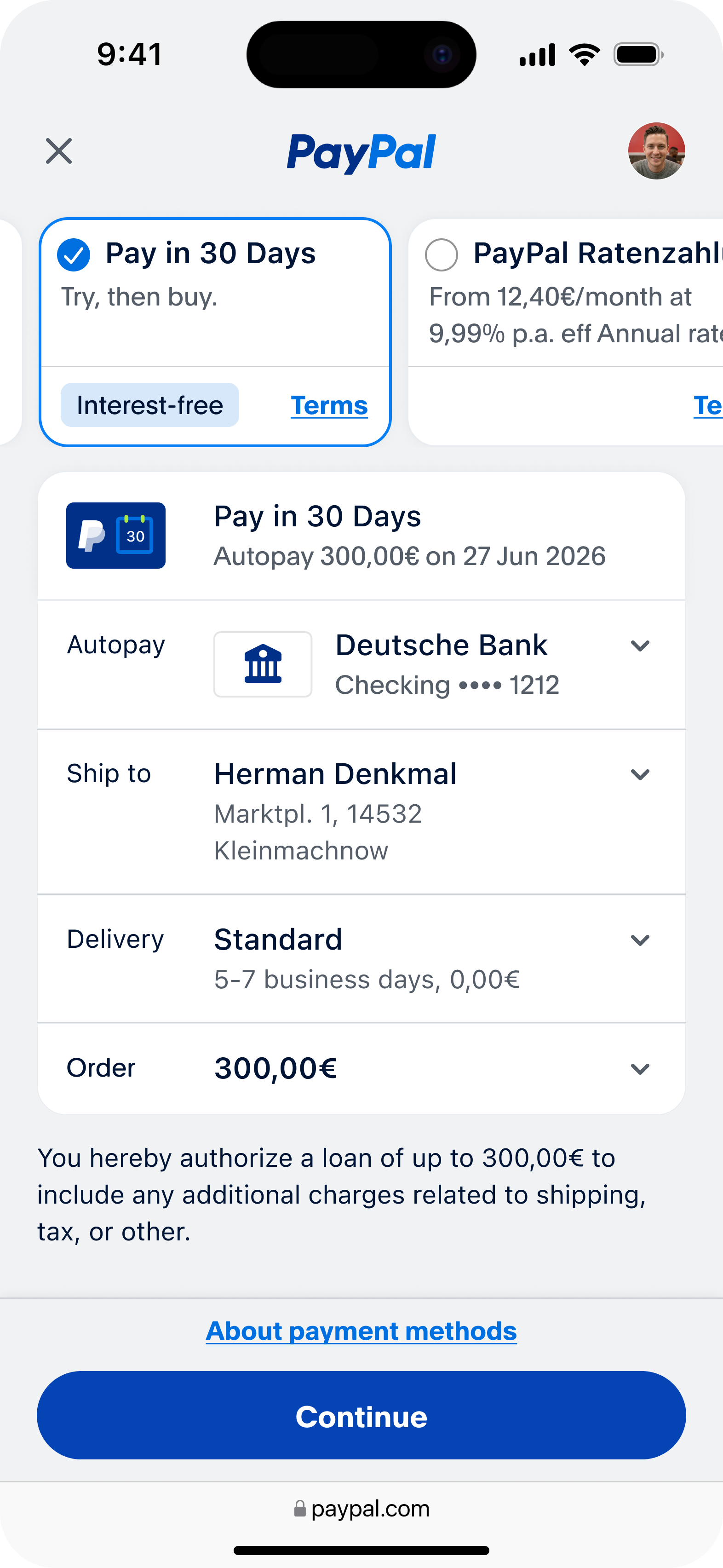
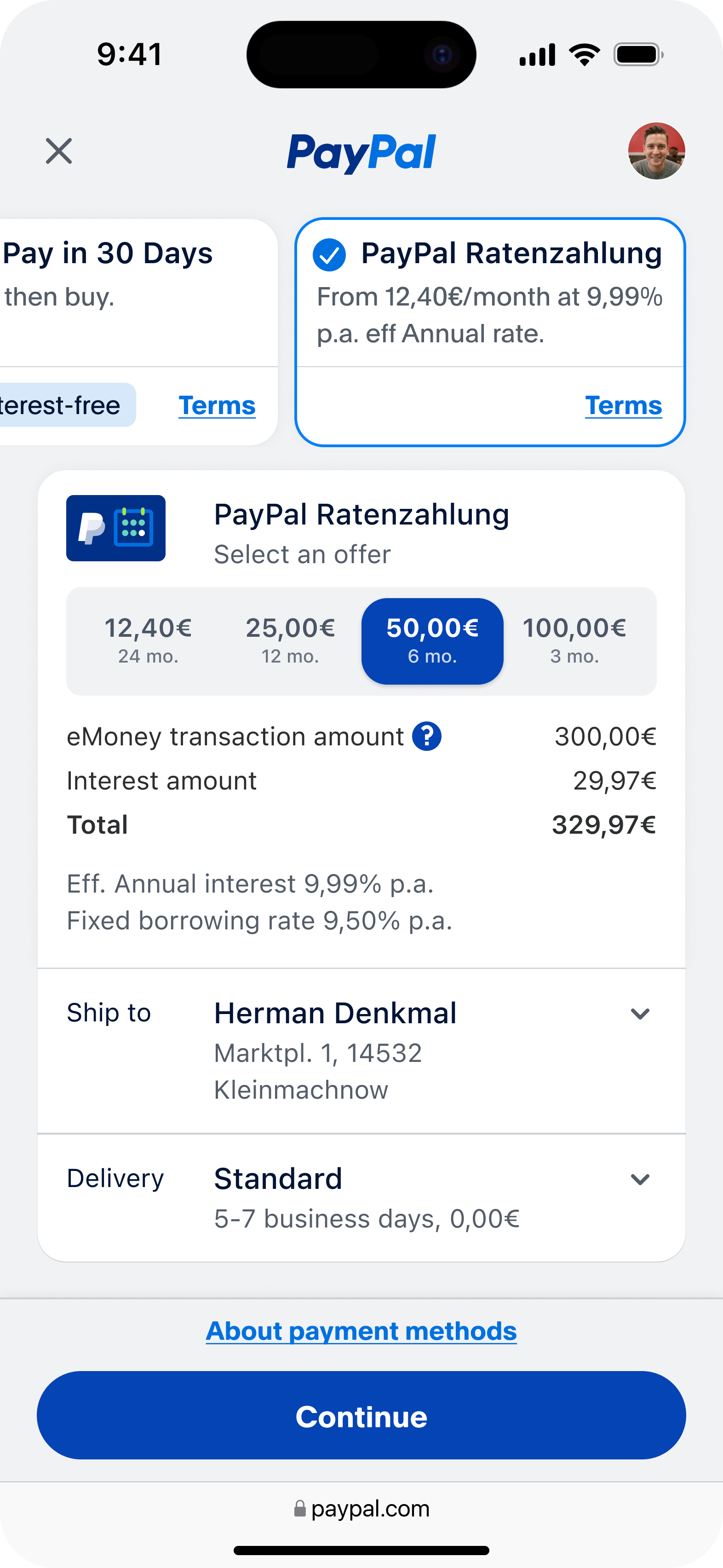
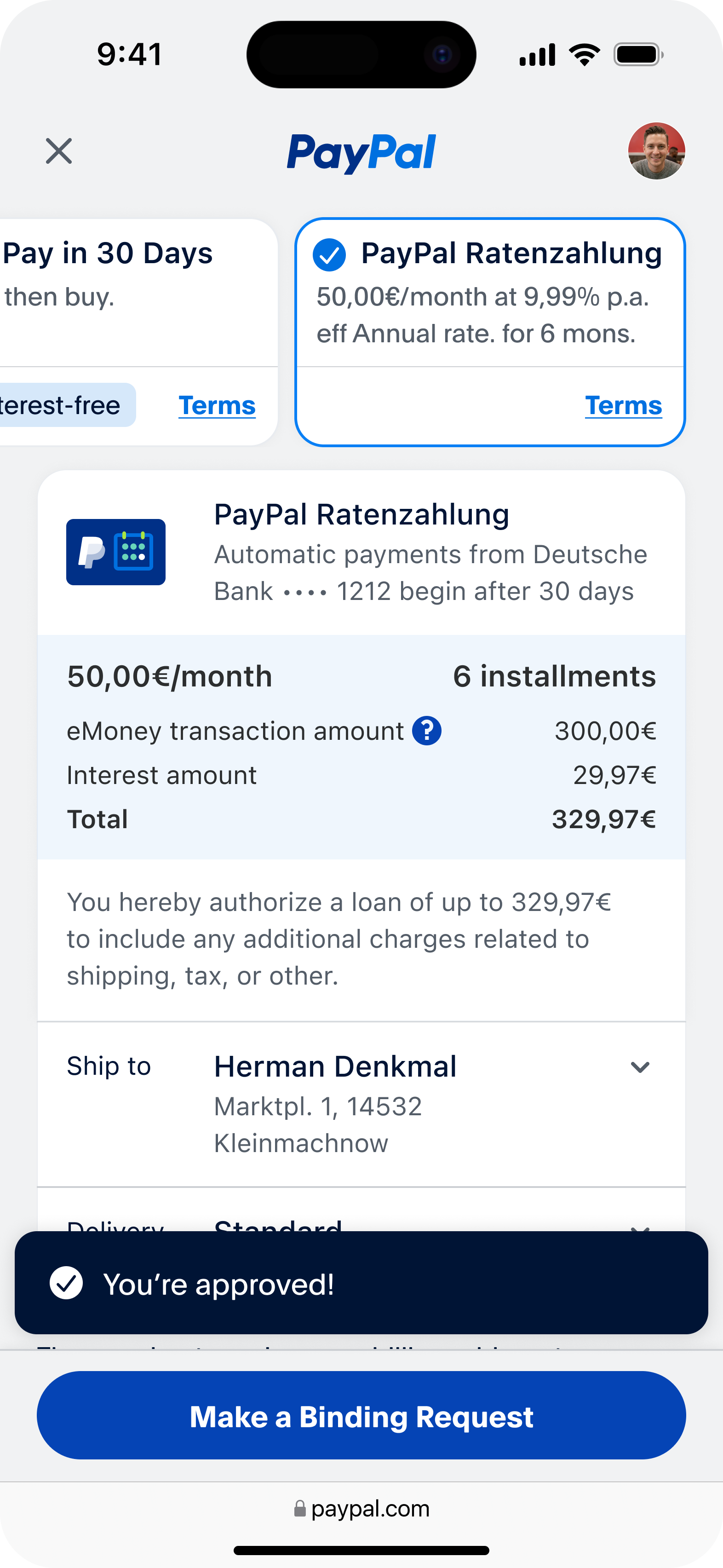
Pay in 30 Days selected in PayPal checkout on an iPhone, with interest-free terms and the order total shown before confirming.PayPal Ratenzahlung selected in PayPal checkout on an iPhone, with installment terms and the monthly cost shown before confirming.

Why did flexibility require four pages?

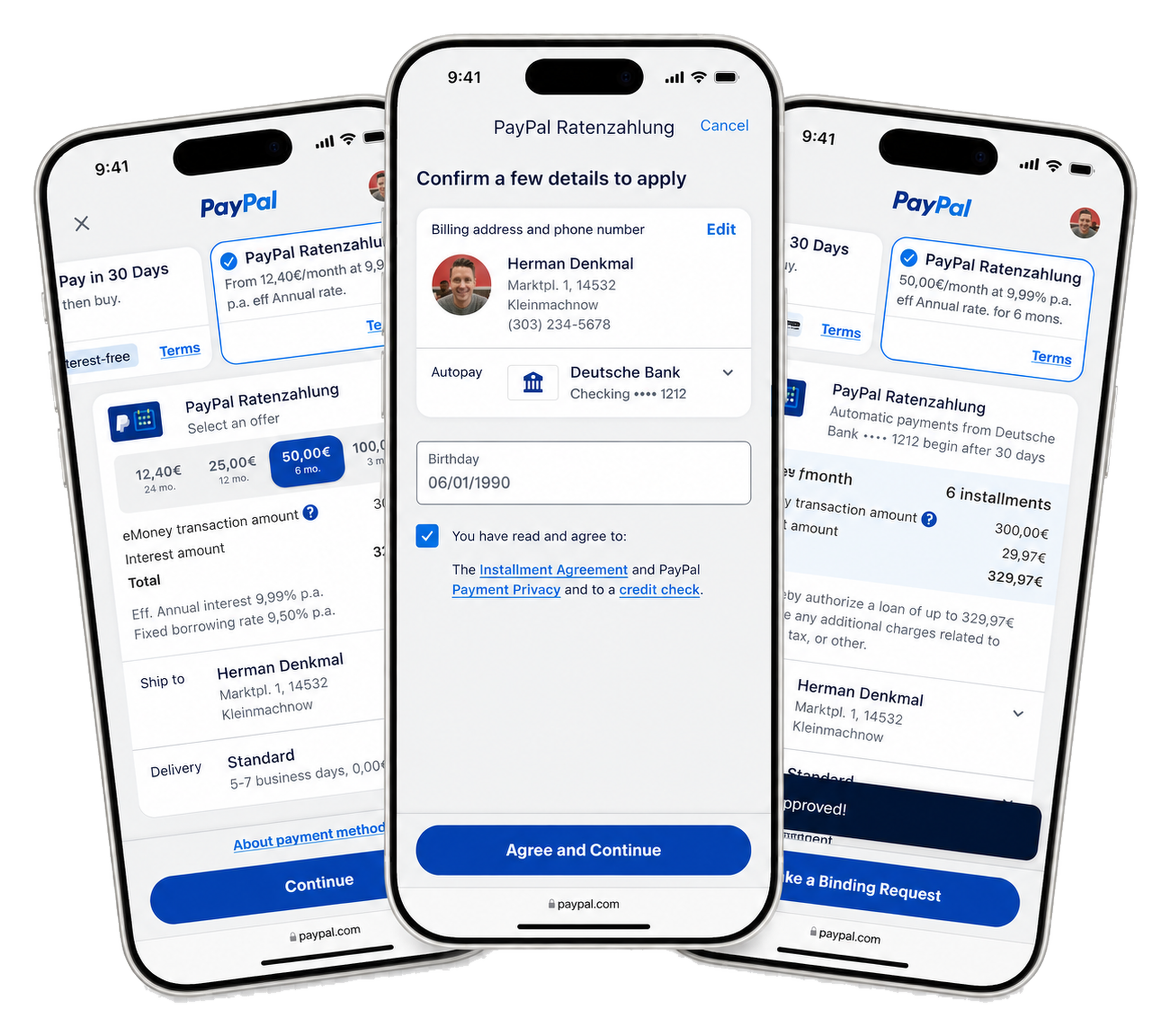
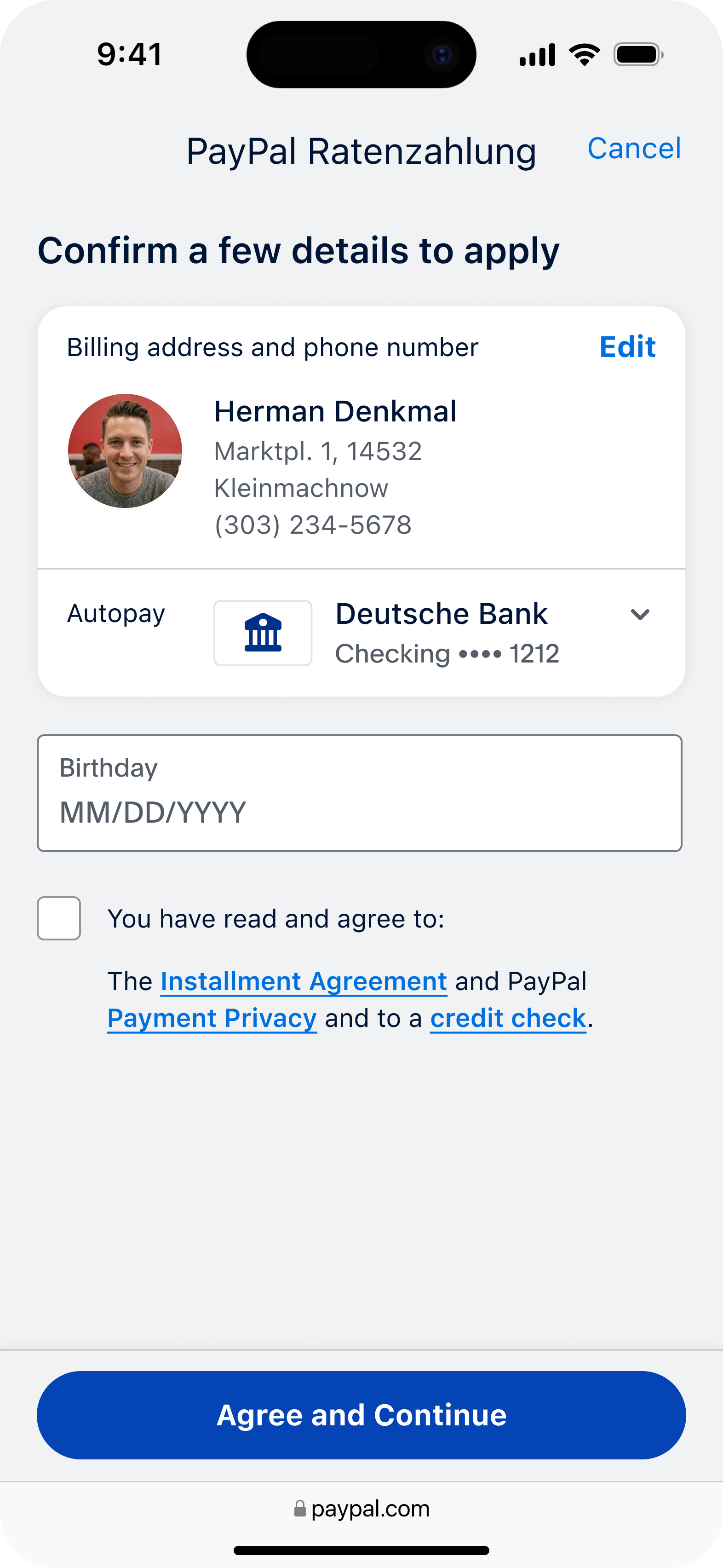
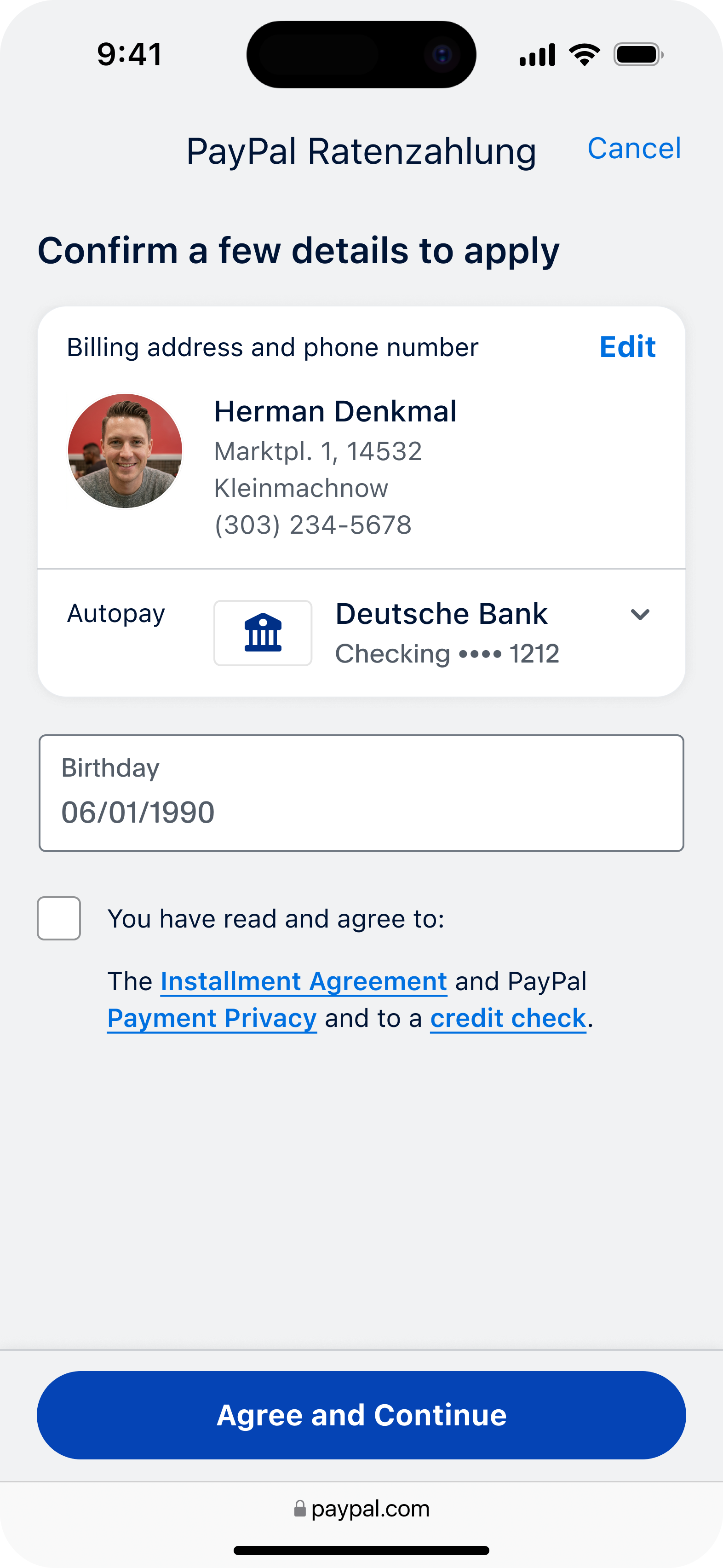
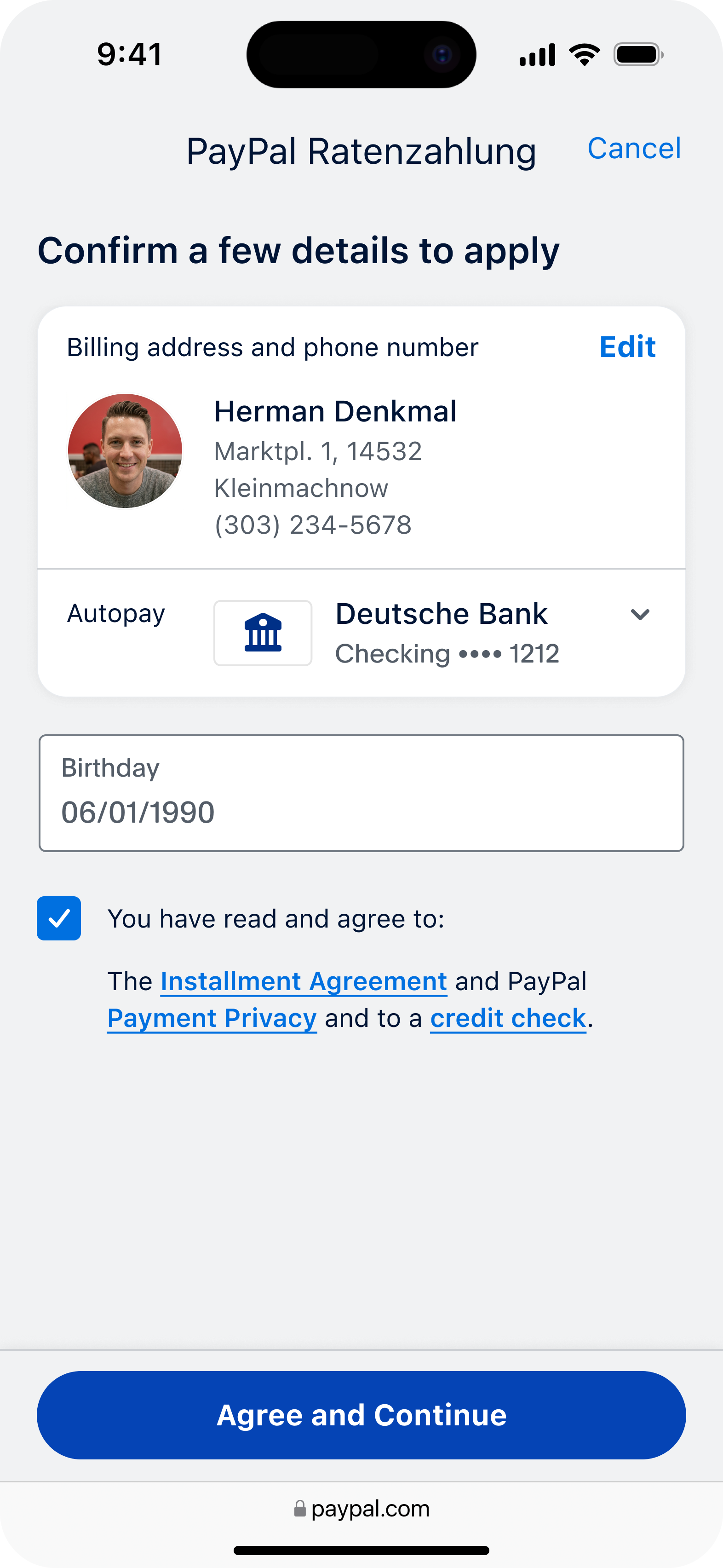
I consolidated three application pages into one by aligning with my checkout partner to surface installment options earlier and streamline terms behind links.
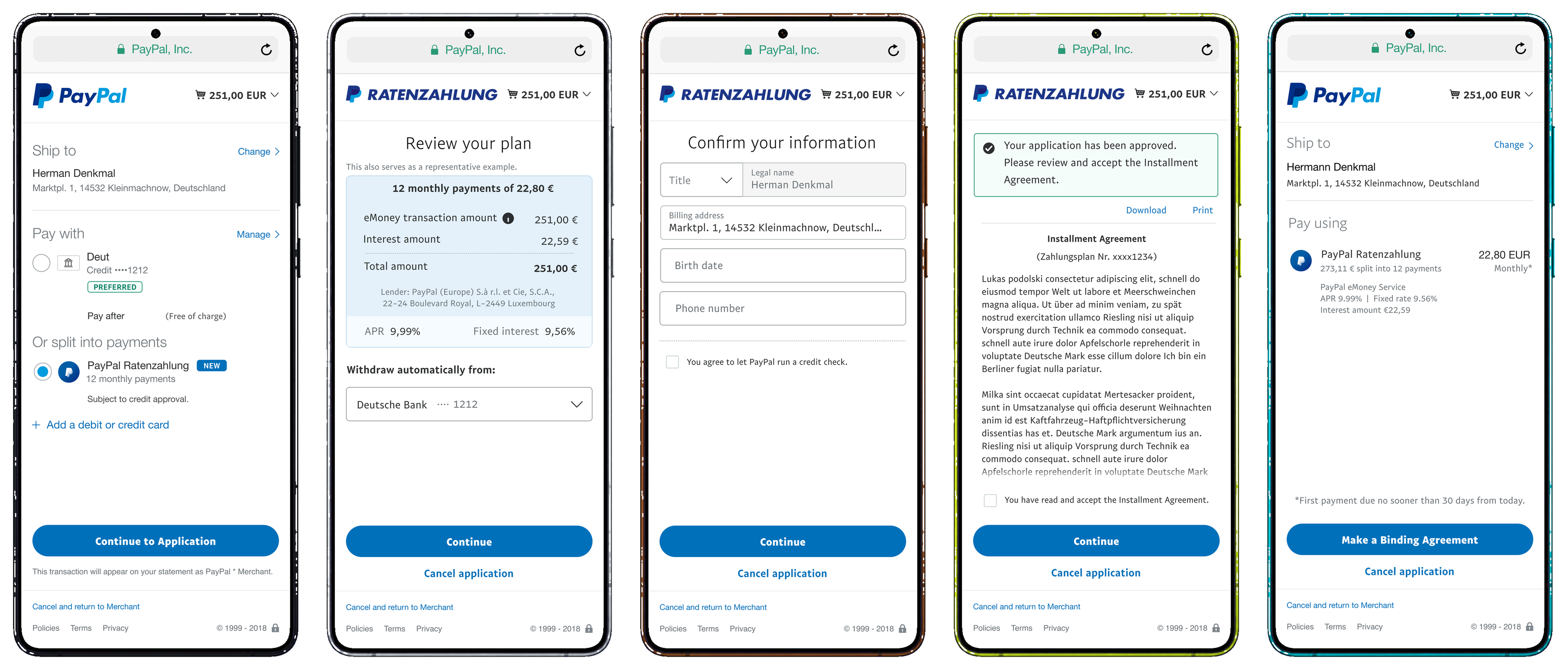
Five Android phones in a row, each showing one page of the legacy four-page Ratenzahlung application.Three iPhones fanned out, showing the redesigned Ratenzahlung application: the offer and its full cost chosen in checkout, one page of details to confirm with the terms and credit check behind links, and the approved loan ready for a binding request.

What am I agreeing to?

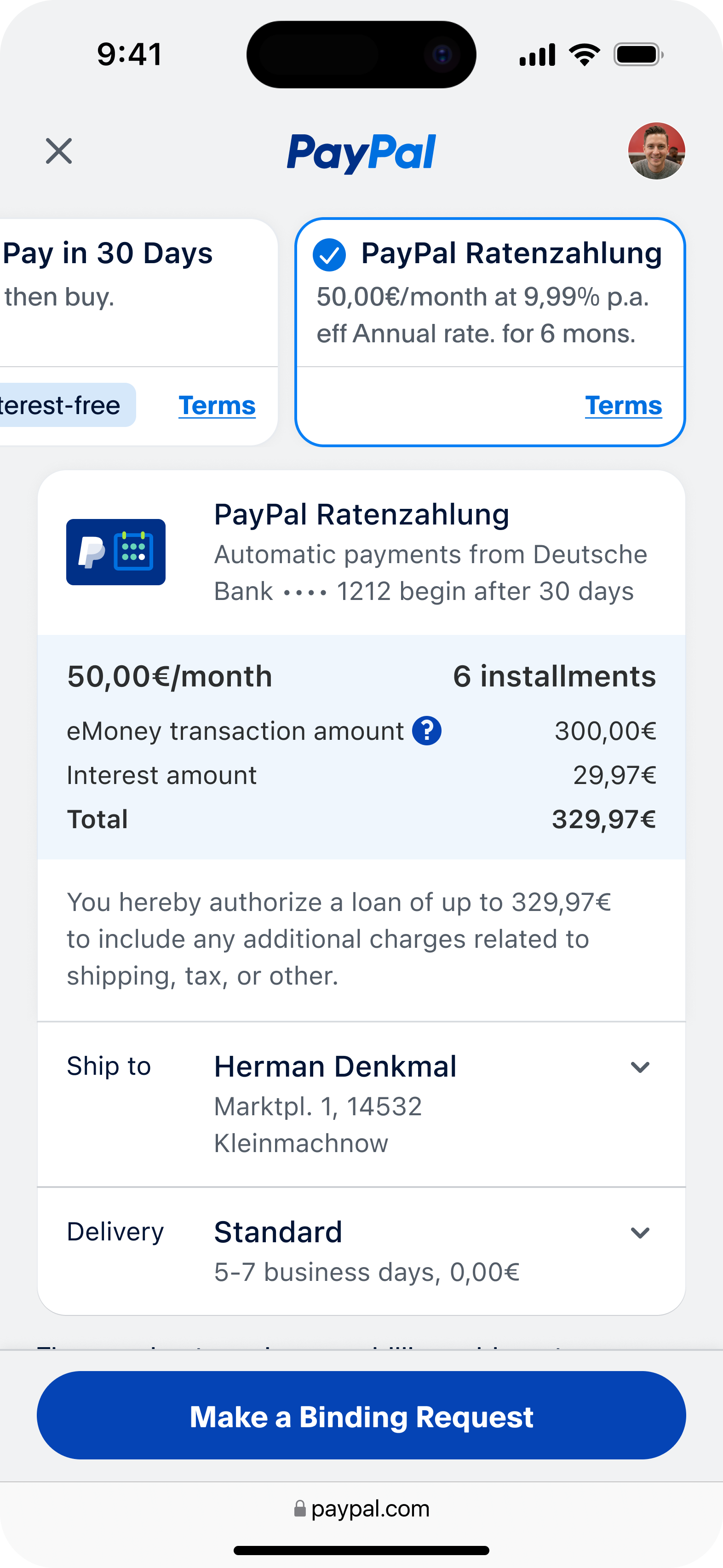
Customers saw every option and estimated cost in checkout, with full terms before commitment.
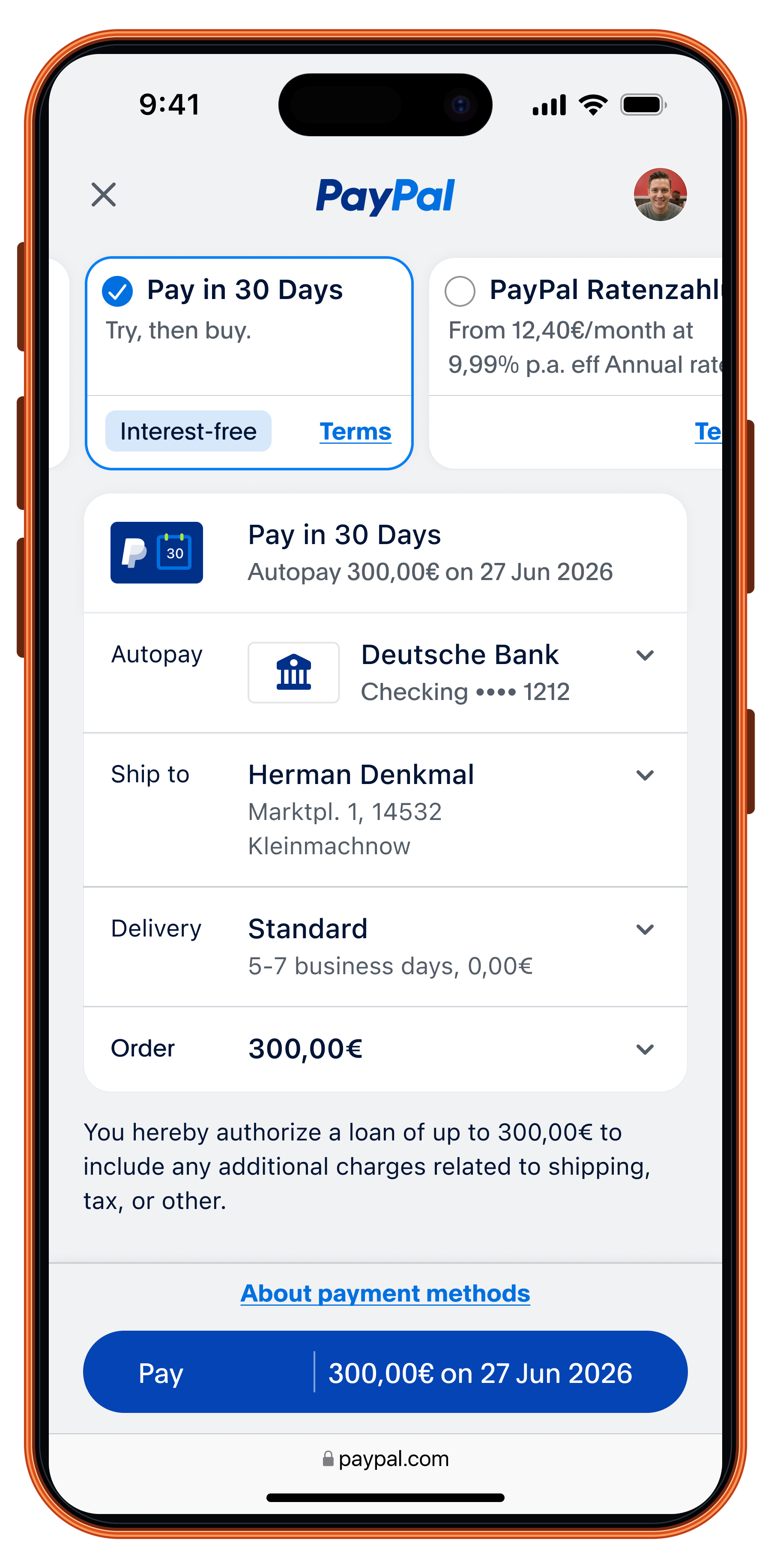
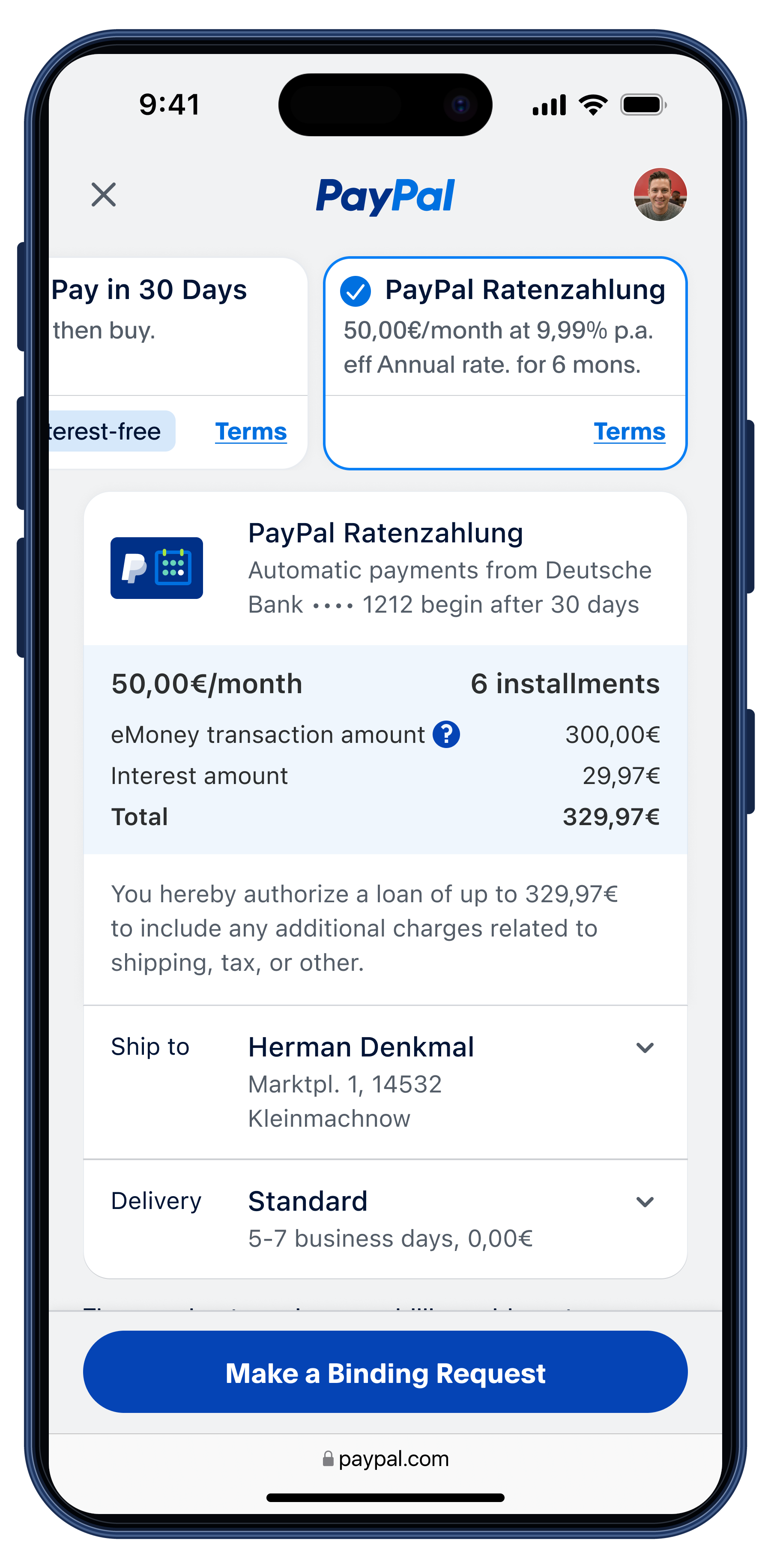
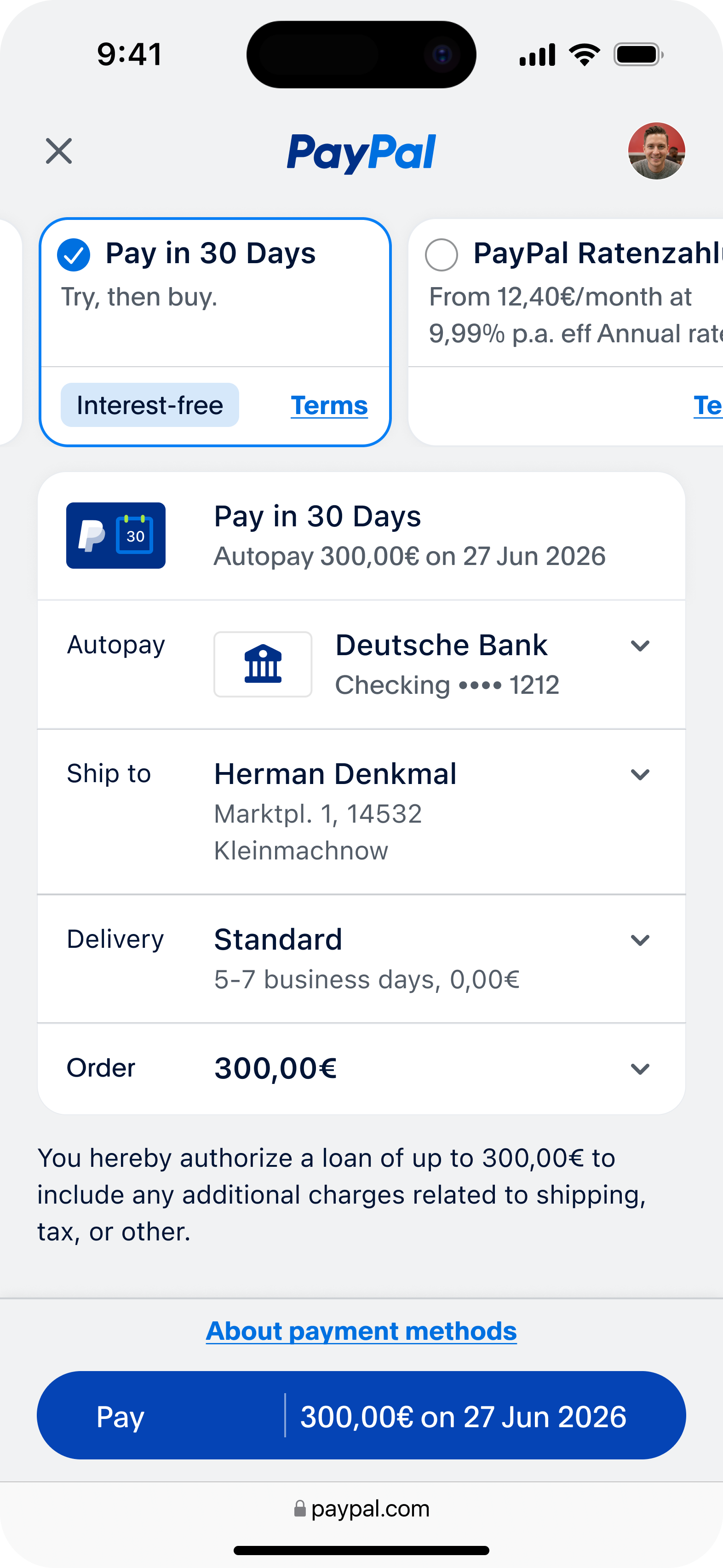
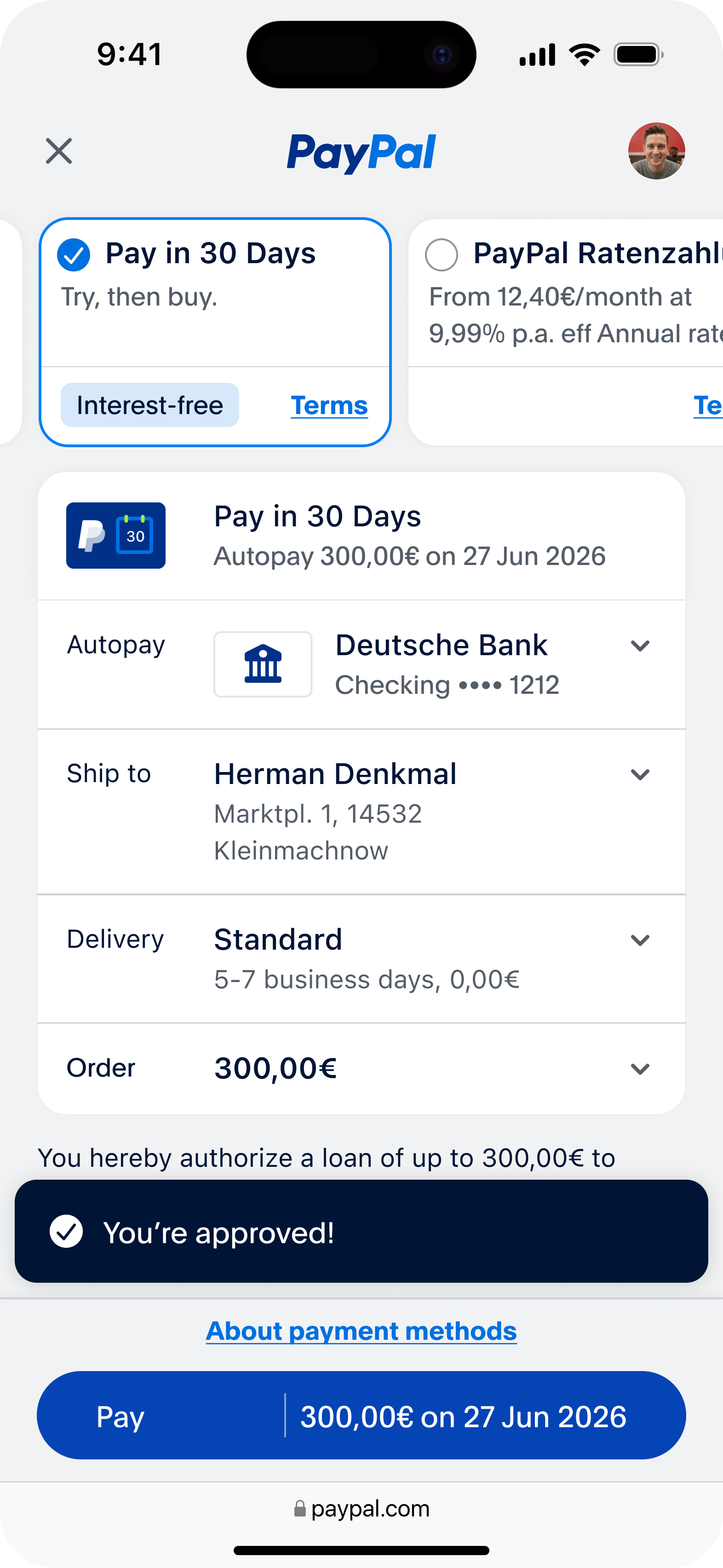
The Pay in 30 Days review screen on an iPhone, with the autopay date, the order total, and the loan authorization stated above a button that pays 300,00€ on 27 June 2026.The PayPal Ratenzahlung review screen on an iPhone, breaking out the monthly installment, the transaction amount, the interest, and the total before the button that makes a binding request.

What if I need more time?

Customers could reschedule after reviewing the new date and fee—adding control and a new revenue stream.
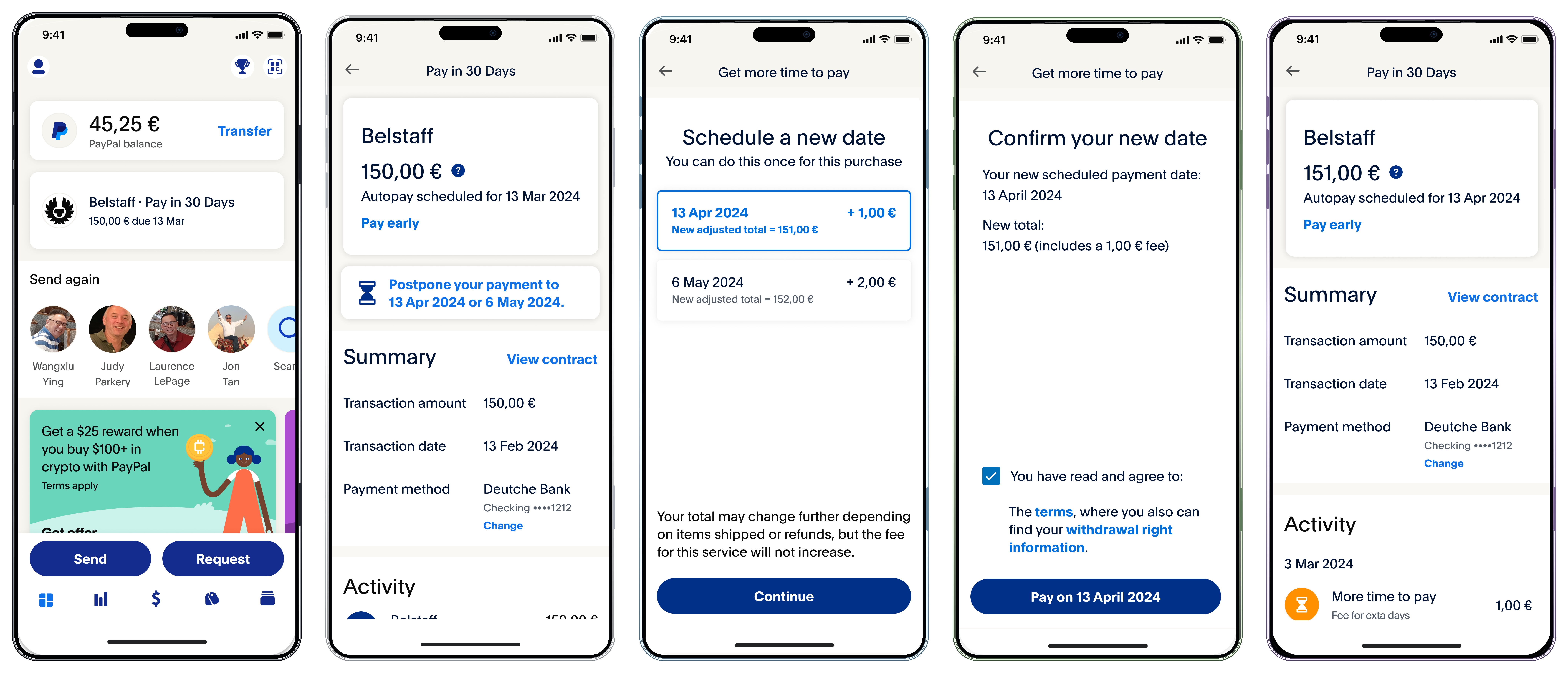
Five iPhone screens showing the Pay in 30 Days snooze flow: an upcoming payment due, the option to postpone it for a small fee, choosing a new date, confirming the fee, and the updated schedule with the extra-day charge applied.

The outcome

Trust changedcustomer behavior.

Impact

Pay in 30 Days

Inspect the purchase first; pay within 30 days.

+48.78%

Monthly total purchase volume

+17.33%

Annual incremental revenue

  • Made payment options and estimated costs visible before application.
  • Moved preferred-bank selection into checkout.
  • Added transparent post-purchase payment rescheduling.
  • Introduced a fee-based payment extension, giving customers more time to pay while generating incremental revenue for PayPal.

PayPal Ratenzahlung

Divide larger costs into planned installments.

+14.92%

Monthly total purchase volume

+25.44%

Annual incremental revenue
  • Added four installment options for different purchase needs.
  • Placed contextual terms in checkout and complete legal terms at review.
  • Rebuilt the application on PayPal’s current UI, reducing it from four pages to one.
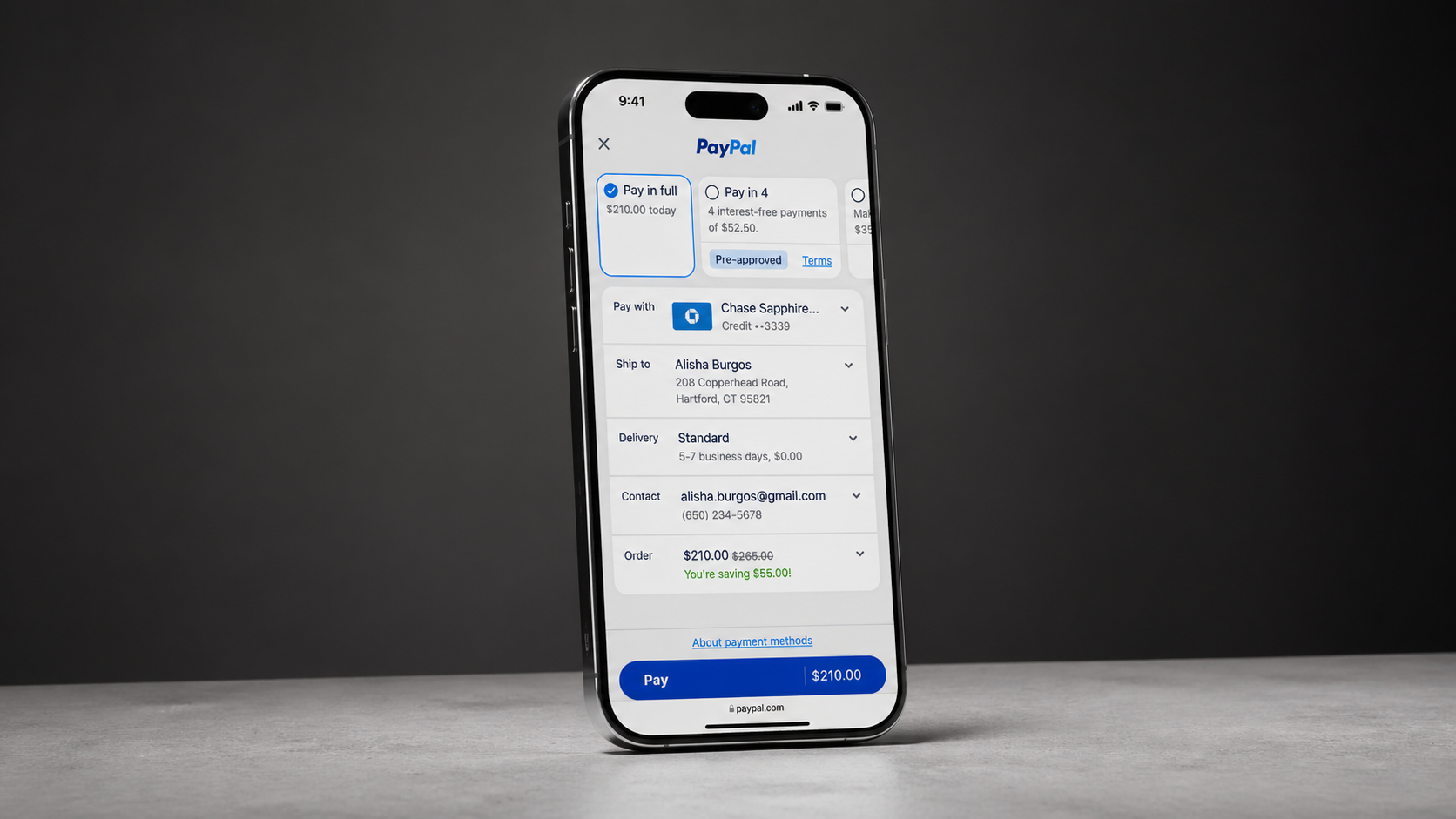
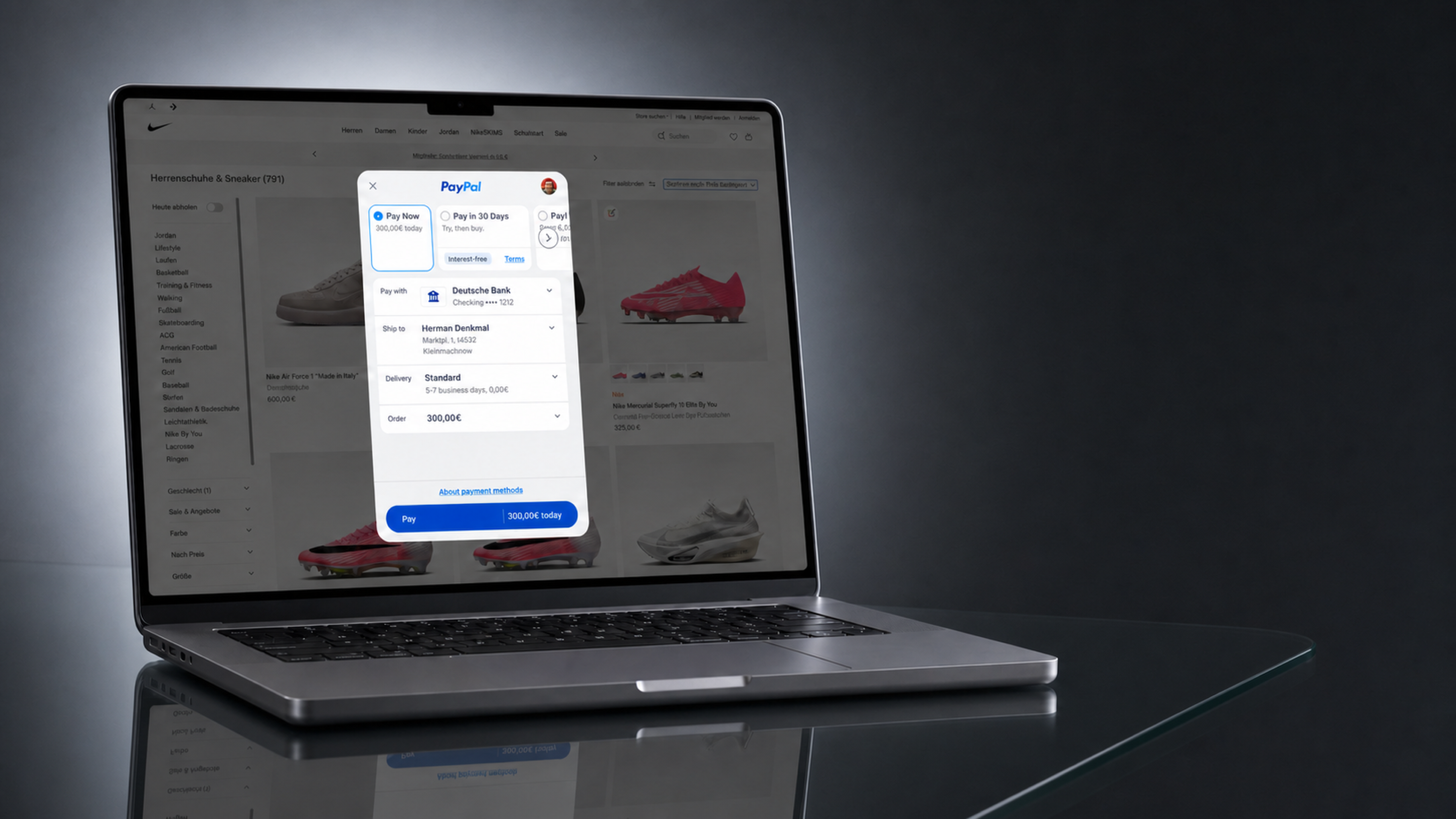
A MacBook on a glass table with the PayPal checkout open over a German storefront: Pay Now, Pay in 30 Days, and Ratenzahlung offered side by side.

Customers did not adopt these products because we made credit more persuasive. They adopted them because PayPal made costs clearer, commitment easier to understand, and payment more controllable.

Prototype

Behind the Work

How the strategy became repeatable across two products
  1. Empathize

    Partnered with PayPal Research to understand German checkout expectations, trust gaps and personas.

    AIOrganized study context, tagged evidence and compared signals across two products

  2. Define

    Turned the evidence into shared trust principles for Pay in 30 Days and Ratenzahlung.

    AIClustered themes, exposed contradictions and drafted success signals

  3. Ideate

    Explored both products in Figma with Product, Legal, Risk and Engineering.

    AIGenerated distinct flows, copy options and edge cases anchored to research

  4. Prototype

    Built high-fidelity checkout flows on PayPal's current application framework.

    AIAdded disclosures, unavailable states and focused variants

  5. Test

    Partnered with PayPal Research for customer testing; I prioritized the design changes.

    AISynthesized sessions, separated said-and-did evidence and ranked issues

  6. Implement

    Stayed with Engineering and UED through evaluation, QA, launch and measurement.

    AIPropagated approved changes and drafted specifications and QA cases

  • Tools
  • Figma + Code Connectdesign intent ↔ production components
  • Figma MCP + AI agentscontext, critique, implementation and QA

Signals become the next product decision

Checkout, Product, Engineering, Legal, Risk, Compliance, Research, and Design used the same principles to evaluate decisions across checkout, application, and servicing—turning customer trust into a shared quality standard rather than a one-off design idea.

Pay in 30 Days

  • Moved preferred-bank selection and add-bank into checkout.

  • Made payment options, estimates, and terms visible earlier.

  • Added post-purchase rescheduling with explicit cost and date confirmation.

  • Adopted the new checkout framework to support clearer comparisons.

PayPal Ratenzahlung

  • Added four installment terms and tested how customers compared them.

  • Rebuilt the application on PayPal’s current UI, reducing four pages to one.

  • Used contextual disclosures in checkout and complete terms at commitment.

  • Migrated the experience to the latest checkout framework.